Tuesday, June 29, 2010

Women and Sleep Loss:The Quest for a Good Night's Sleep
 If our well-being were a string of dominos, sleep loss would be the fallen piece that sends everything else cascading. As the nights of poor sleep add up, so too does of host of metabolic, psychological and physiological problems that can touch nearly every aspect of life. And when it comes to sleep loss, mid-life tends to bring the perfect storm for many women.
- According to Sacramento sleep expert Lydia Wytrzes, M.D., a neurologist and director of Sutter Sleep Disorders Center, the perimenopausal/menopausal age range is the most likely time for sleep disorders to occur in women. In fact, 50 percent of women going through menopause report sleep difficulties."By mid-life, women face a culmination of issues that affect sleep," says Wytrzes. The key is to identify which of those factors are at play and then methodically work to address them.
Hormones
Any woman struggling through a night of hot flashes and sweaty sheets knows her hormones are disrupting her sleep. But scientists now know that rapid hormone fluctuations beginning as early as the late 30s can disrupt sleep even before signs like hot flashes emerge.
"Ten years ago, you'd be hard pressed to find research on menopause and sleep," says Dr. Wytrzes. "Today, we've learned that estrogen loss indeed affects sleep. People are taking this seriously and looking for ways to solve the problem."
Mental Health
Depression, anxiety and a number of other mental health conditions can affect the quality of a person's sleep. Women with a history of these problems, particularly depression and post-partum depression, may find that their symptoms flare as hormonal changes occur.
"It's not that women are depressed about menopause," says Wytrzes. "But this tends to be a time where these issues can re-emerge."
Lifestyle
Sandwiched between aging parents and growing kids (not to mention the job, the house and the latest e-mail), middle-aged women have complicated lives. With busy schedules, it can be harder than ever to maintain healthy habits like home-cooked meals, regular exercise and relaxation techniques. As the stress snowballs, reliance on caffeine and alcohol increase as well. All of these factors can influence the ability to fall into a deep, restful sleep.
Underlying Health Conditions
By mid-life, any habits and predisposed weaknesses begin to come to bear in the form of obesity, diabetes, addictions, thyroid disorders and more, all of which can affect sleep. The 40s are also the time when some adults may develop "primary" sleep disorders such as obstructive sleep apnea and restless leg syndrome, both of which can be exacerbated by stress, weight gain and diet.
"So all this stuff is coming together in this age group which results in a big boost in complaints about sleep," explains Wytrzes.
- Getting Relief
- The first step toward addressing sleep issues is to determine whether sleep loss is truly a problem. Although experts strongly recommend an average seven to eight hours of sleep a night for most adults, not all people need that much sleep, especially as they get older. Although rare, some do well on as little as six hours a night. The key, advises Wytrzes, is whether or not a person has daytime complaints as well. Unusual irritability, memory loss, falling asleep during the day and an overall lack of energy are all signs that a person is not getting enough sleep.
"The good news is that there is almost always something that can be done to improve sleep," says Wytrzes.
Anyone with a sleep problem should begin by honestly exploring why the problem may be happening in the first place. Questions to ask include:- Am I experiencing more stress in my life that I used to experience?
- What circumstances have changed in my life lately?
- Have I been exercising on a regular basis? If so, how vigorously and for how long?
- Do I feel more agitated that usual? If so, why might this be the case?
- What does my caffeine and alcohol consumption look like? Do I drink coffee in the afternoon or evening? Do I drink alcohol close to bedtime?
- Do I practice relaxation techniques to help myself decompress in the evening?
- Do I have a soothing bedtime routine?
- Do I work or spend time on the computer late into the evening?
- Is my bedroom dark and quiet at night?
- Does my sleep partner snore? If so, do I use earplugs?
- Am I watching television in my bed at night?
- Do I wake up and go to bed at the same time every day?
The answers to these questions can help a person evaluate the quality of their sleep hygiene -- that is, the personal habits that impact sleep. According to Wytrzes, many people will find significant improvement in their sleep by carefully following recommended tips for a good night's sleep. She advises people to practice good sleep hygiene for at least a month. During that time, keep a sleep log, noting the hours of sleep, the number of wakings, time of wakings and any other information that may be of note. If after six weeks sleep problems persist, visit a primary care physician. Be sure to bring the sleep log as a helpful starting place.
A number of underlying health issues impact a woman's sleep such as hormonal changes, mid-life weight gain, sleep apnea, restless legs, depression and thyroid imbalances. By partnering with her doctor, a woman can get to the bottom of the problem by identifying the primary issues at hand.
"When people come to see me with this problem, we spend 45 minutes to an hour identifying all of the factors playing a role," says Wytrzes. "Often they leave the office with a list of homework, which can include a range of things such as changes in lifestyle, medication or even a trip to the sleep center to be monitored. These are all options that you have to identify."
There is no one answer to sleep problems, reminds Wytrzes.
"I think people used to think that sleep problems were something you just had to handle on your own and that there was something really wrong with you if you had to take sleep medication for more than two weeks," she says. "Though medication for sleep is certainly not for everyone, it no longer has the stigma it once had for those people in whom it is appropriate. We now know how critical sleep is to our health and have a variety of ways to go about approaching it."

A Doctor's Advice for Getting a Good Night's Sleep
I thought that this was interesting.
- Brought to you by: Palo Alto Medical Foundation
- Whether it's a stressful workday or concerns with family keeping you awake at night, it's not always easy to get the sleep you need to feel refreshed and rested the next day. You are not alone.
More than half of all adults in the United States experience insomnia at least a few nights a week. William Hart, M.D., who heads the Palo Alto Medical Foundation Santa Cruz Sleep Disorders Center, gave his top 10 tips on how to get some quality shut-eye.
"Getting enough sleep is very important for both your physical and emotional health," says Dr. Hart. "Remember, sleep is a process, so a consistent sleep schedule can help. Although you shouldn't have to work at falling asleep, creating the right conditions will help sleep come naturally."
Top 10 Tips For A Good Night's Sleep- Make sure your bedroom is dark, cool and comfortable.
- Use your bed to sleep in, not to read or watch TV.
- Go to bed at a regular time every night, and get up at the same time each morning. Don't be tempted to take a nap during the day, particularly later in the day or evening.
- Keep it quiet. Earplugs, a white noise machine or fan can block out disturbing sounds.
- Limit alcohol, nicotine and caffeine, especially close to bedtime. All of these can cause you to wake up in the night and not be able to get back to sleep.
- Don't drink and eat too much close to bedtime. However, a light snack may help you sleep.
- Regular exercise can help you sleep better, but make sure you don't exercise within three hours before going to bed.
- Do something relaxing before bedtime such as reading a book, meditating, doing yoga or listening to soft music.
- Write down your sleep habits and patterns in a diary that you can share with your doctor.
- Keep a worry journal. If racing thoughts prevent sleep you can remind yourself that you have completed your worrying for the day with all your anxieties tucked away in the journal for the night. This may calm you as you fall sleep, reassuring yourself that you can always worry again tomorrow.
The Power of Dance
I just saw this video from one of my favorite places: ted.com. Wow, it is very inspirational! It's long, 16 minutes, but her story is very powerful... and then she does an incredible dance at the end.
I have always believed in the power of dance to heal and to reach out to others via storytelling through movement. This is a brilliant example!
Friday, June 25, 2010
Peak: How Great Companies Get Their Mojo from Maslow (J-B US non-Franchise Leadership) by Chip Conley

Editorial Reviews
From Publishers Weekly
Despite using the word mojo in the subtitle and citing inspiration he received from 1960s counterculture icon Timothy Leary, this guide to better management isn't for hippies. Yes, Conley started the California boutique hotel chain Joie de Vivre Hospitality with the Phoenix Hotel, once a haven for faded rock stars. And yes, he quotes liberally from rebel CEOs who surf. But Conley's book is packed with thoughtful, instructional stories and advice for entrepreneurs as well as Fortune 500 managers, gleaned from his own experience as well as other business books. At the center of this confessional how-to is psychologist Abraham Maslow's hierarchy of needs, a pyramid that ranks human needs from base to self-actualizing. Used as the basis for employee, customer and stakeholder satisfaction, Conley contends, it can transform a business and its people. Though Stephen Covey and Peter Drucker have looked to Maslow before, Conley describes how using the pyramid saved his company from bankruptcy when the dot-com bubble burst. Conley is most successful when he expresses his ideas in numbered lists rather than the wordy passages that slow down the beginning. On the whole, though, his advice is inspiring and accessible. (Sept.)
Copyright © Reed Business Information, a division of Reed Elsevier Inc. All rights reserved.
Copyright © Reed Business Information, a division of Reed Elsevier Inc. All rights reserved.
From Booklist
When Hotelier Conley was profiled by USA Today as one of its People to watch in 2001, he seemingly could do no wrong. His company, Joie de Vivre Hospitality, which operates a chain of boutique hotels in the San Francisco Bay area, was riding high on the dot-com boom. But then the bubble burst, followed by 9/11 and an industry-wide crisis that hit his upscale business hard. As his world crumbled around him, Conley turned to the writings of psychologist Abraham Moslow for inspiration. In contrast to the darker premises behind Freud's psychoanalysis and B. F. Skinner's behaviorism, Maslow took a more positive approach, seeking to study the best and brightest that human nature has to offer, encouraging an environment of self-actualization that encourages peak experiences. Conley understood that personal transformation and corporate transformation are not all that different, and this story shows not only how Maslow's ideas brought about a resurrection in Conley's business but also how similar mind-sets continue to create growth and a positive work environment at companies such as Google, Netflix, Harley-Davidson, and Apple. Siegfried, David
Wednesday, June 23, 2010
About the founder of BodyTalk
Dr. John Veltheim
President & Founder
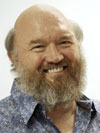
 Click to watch a short video clip
His extensive post graduate studies have included applied kinesiology, bioenergetic psychology, osteopathy, sports medicine, counseling, comparative philosophy and theology. John developed the Mindscape system as a tool to enhance the functioning of the mind. He also developed a system of lymphatic drainage and rehabilitative acupuncture. John has written nine books on Acupuncture, Reiki, and BodyTalk and has specialized in incorporating dynamical systems theory into the medical model and energy medicine.
John and his wife Esther (who developed the Breakthrough system and has written six books on philosophy and psychology) have been lecturing internationally for nearly 20 years teaching Mindscape, Breakthrough, Reiki, Advaita philosophy, BodyTalk and life sciences. They currently live in Sarasota, Florida.
For more info:https://www.bodytalksystem.com
Tuesday, June 15, 2010
Personal Training
A personal trainer is a person who helps people exercise.
The 5 classic components of fitness are muscular strength, muscular endurance, body composition, cardiovascular endurance, and flexibility. Although there are other subsets like power and speed. The definition of healthy in this context means an absence of a disease that would affect one's ability to exercise. Anyone outside that scope of practice should be placed in a trainer's scope after a visit to the doctor to see what kind, if any, exercise they are capable of.
info from Wikipedia
Many personal trainer work through gyms like 24 hour fitness and Golds Gym. There are different levels of personal trainers depending on which gym they are working through. At each level the price will change according to the experience of the trainer. A trainer can work with someone one-on-one or in a small group. The trainer is there to guide the client through a series a movement that will allow the client to achieve their goal wether that be weight loss or any other goal in mind.
Go Ahead and Exercise. You Deserve it!

THE KEYS TO EXERCISE SUCCESS
The first step in meeting any recommendation for how much exercise to do is to simply get started with an activity that will work for you.The tools below will help you in assessing your health, figuring out your barriers to exercise and working through some of the challenges to sticking with a program.
Pre-Exercise Health Assessment
The pre-exercise health assessment will give you an idea of what factors increase your risk for exercise related illness or injury. You can share these results and the recommended exercise program with your personal physician.
Pre-Exercise Health Assessment
The pre-exercise health assessment will give you an idea of what factors increase your risk for exercise related illness or injury. You can share these results and the recommended exercise program with your personal physician.
Barriers to Exercise Assessment
The barriers to exercise assessment will help you discover what specific obstacles are getting in the way of a consistent exercise habit. It assesses seven different areas of potential barriers and provides you with solutions to overcoming your specific challenges.
The barriers to exercise assessment will help you discover what specific obstacles are getting in the way of a consistent exercise habit. It assesses seven different areas of potential barriers and provides you with solutions to overcoming your specific challenges.
Additional Tools for Success
- Exercise Time FinderPutting your schedule on paper allows you to see when you can fit in exercise, and makes you more likely to stick to a plan.
- Self-Assessment
Map out your goals and plan, and sign an agreement with yourself to begin or continue exercising.
- Keep it Simple
Pick exercises are that are easiest and the most enjoyable for you. - Create a Ritual
Write down your plan to make exercise a daily routine in your life.
- Cost/Benefit Analyzer
Examine costs and benefits of regular exercise vs. inactivity.
from: http://www.acsm.org
Tapas Acupressure Techniquw
TAT is:
an easy way to dissolve stress, limiting beliefs, and negativity. We teach how to use TAT to get over stuff without judgment, analysis, or reliving anything. The process is a combination of the TAT Pose (touching acupressure points on the head) while putting attention on the Steps of TAT (a set of freeing and empowering intentions).
from: http://www.tatlife.com
an easy way to dissolve stress, limiting beliefs, and negativity. We teach how to use TAT to get over stuff without judgment, analysis, or reliving anything. The process is a combination of the TAT Pose (touching acupressure points on the head) while putting attention on the Steps of TAT (a set of freeing and empowering intentions).
from: http://www.tatlife.com
For those of us who know Tapas and are familiar with TAT, watch this youtube video. It's worth it... and joyful!
Thursday, June 10, 2010
Chiropractic Care
Chiropractic is a health care approach that focuses on the relationship between the body's structure—mainly the spine—and its functioning. Although practitioners may use a variety of treatment approaches, they primarily perform adjustments to the spine or other parts of the body with the goal of correcting alignment problems and supporting the body's natural ability to heal itself.
- People seek chiropractic care primarily for pain conditions such as back pain, neck pain, and headache.
- Side effects and risks depend on the type of chiropractic treatment used.
- Chiropractic practitioners in the United States are required to earn a Doctor of Chiropractic degree from properly accredited colleges.
- Ongoing research is looking at effects of chiropractic treatment approaches, how they might work, and diseases and conditions for which they may be most helpful.
- Tell your health care providers about any complementary and alternative practices you use. Give them a full picture of what you do to manage your health. This will help ensure coordinated and safe care.

info from:http://nccam.nih.gov/health/chiropractic/
Thursday, June 3, 2010
Development on preventing cancer
FYI, an interesting development about preventing cancer, even obesity. This talk is about 20 minutes, but worth watching if interested in the subject.
Subscribe to:
Posts (Atom)